Colorado Springs is one of those rare places where a normal weekday can still turn into a real outdoor session. You can climb plastic at Pure, grab gear at Gearonimo, and be standing under sandstone or granite before the day has had time to get away from you.
For local bouldering, three areas come up again and again: Ute Valley, Garden of the Gods, and Mount Herman. They each have a different personality. Ute Valley is the close-to-town circuit. Garden of the Gods is the iconic red sandstone experience. Mount Herman is the cooler, quieter granite zone up by Monument.
Before heading out, check the current area pages on Mountain Project for route names, grades, approaches, comments, and access notes. Conditions change, land managers update rules, and local climbers often leave helpful recent beta. And if you do not own a crash pad, or you need an extra pad for the crew, stop by Pure Bouldering for crash pad rentals before you head outside.
Ute Valley Park
Ute Valley is a local favorite because it is easy to work into real life. It sits in northwest Colorado Springs, close enough for an after-work session but still wild enough to feel like you stepped out of town for a minute. The City of Colorado Springs describes the park as a place of rocky, forested hogback formations with trails used by hikers, runners, mountain bikers, dog walkers, and other outdoor users. In other words: climbers share this space.
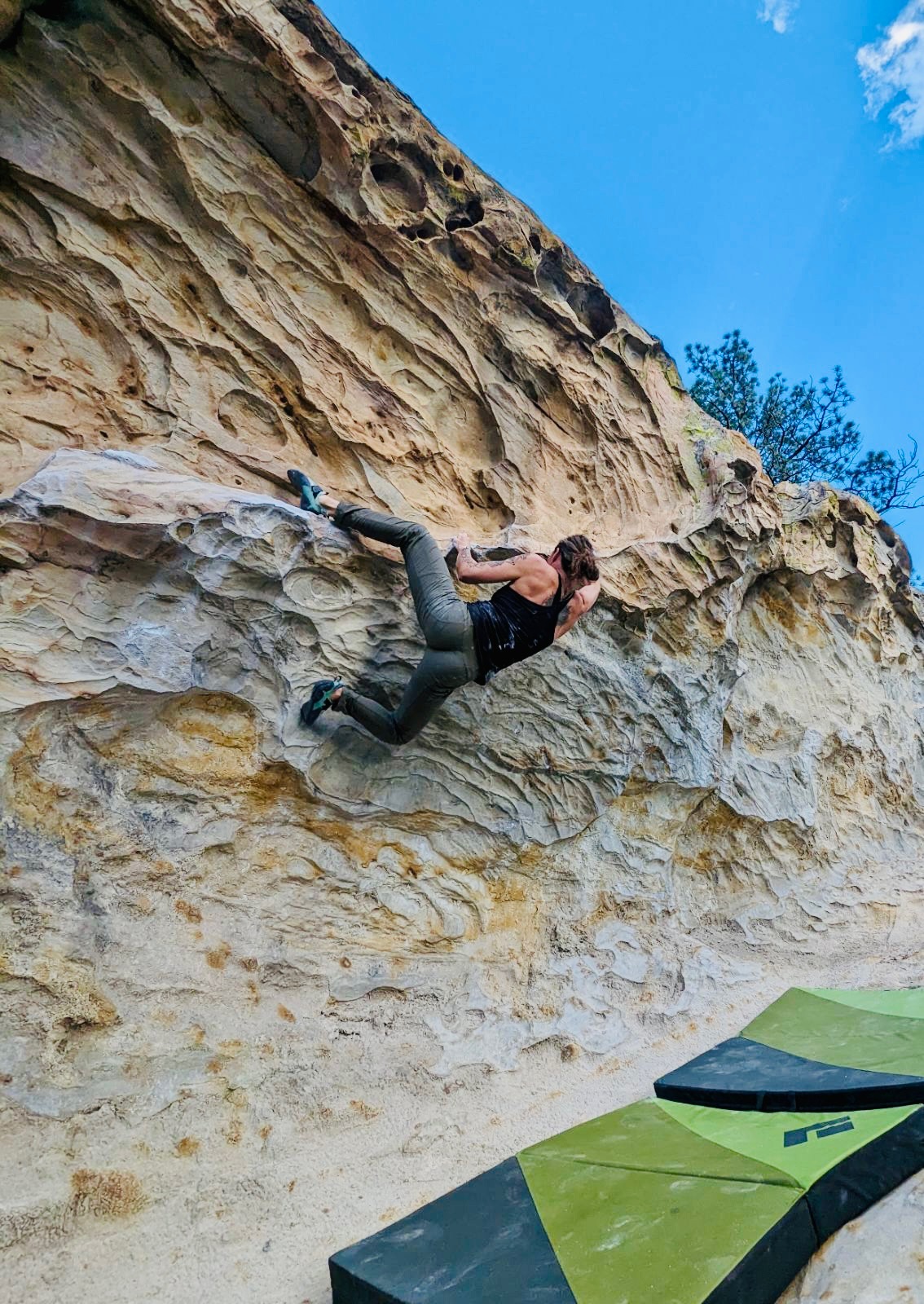
The bouldering here is compact, approachable, and movement-focused. Mountain Project lists problems throughout the Ute Valley Park bouldering zones, especially around the South Side area. You will find short climbs, pocketed features, traverses, and problems that can feel surprisingly stout for their height. It is a good place to build outdoor movement skills after time in the gym because the climbing rewards footwork, body tension, and careful reading.
Ute Valley is also a reminder that outdoor bouldering is not gym bouldering with scenery. Landings can be uneven, rock quality varies, and even low problems deserve real pad coverage. Bring a pad, bring a spotter, and consider renting an extra crash pad from Pure if you are planning to try something with a rocky or sloping landing.
Local notes for Ute Valley:
- Best for quick sessions, moderate projecting, and learning outdoor movement.
- Check Mountain Project for current approach beta and problem locations.
- Stay on established trails whenever possible and be courteous to hikers, bikers, dogs, and neighborhood access points.
- Treat fragile or questionable rock with caution, especially after storms.
Garden of the Gods
Garden of the Gods is the most recognizable climbing area in Colorado Springs, and for good reason. The red sandstone fins, towers, and ridges are dramatic from every angle. Most climbers think of the Garden as a roped climbing area, but Mountain Project also lists around 60 boulder problems within the park, including problems in the main bouldering zones and smaller warmup areas.
That said, Garden of the Gods asks for more care than almost anywhere else on this list. The sandstone is soft, the park is highly visible, and climbing is regulated. Mountain Project's Garden of the Gods page points climbers to the free annual climbing permit, current access notes, seasonal closures, and park rules. The park also bans chalk and chalk substitutes of any kind. This is not the place to brush holds white and move on.
The reward is a uniquely Colorado Springs climbing experience: sculpted red stone, short approaches, historic formations, and the feeling that you are climbing inside the postcard everyone else is photographing. The cost of that privilege is responsibility. Do not climb wet sandstone. Respect closures. Keep dogs and gear under control. Stay low where bouldering is allowed, and make sure the problem you are looking at is actually legal to climb.
Local notes for Garden of the Gods:
- Best for scenic sessions, careful movement, and classic Colorado Springs atmosphere.
- Get the required permit and check current closures before climbing.
- No chalk or chalk substitutes are allowed.
- Avoid climbing after rain; wet sandstone is fragile and can break permanently.
- Expect an audience, especially on weekends and holidays.
Mount Herman
Mount Herman feels different from Ute Valley and Garden of the Gods almost immediately. The setting is higher, the air is cooler, and the rock is granite instead of sandstone. Mountain Project describes the Mount Herman bouldering area as secluded, afternoon-shaded, and mostly high-quality granite, with some fire-damaged rock that can be crumbly. It lists about 60 total climbs across named boulders like Main Boulder, Highball Boulder, Skull Crusher Boulder, Microchips Boulder, and others.
This is the spot to choose when you want a little more of a mission without turning the day into an expedition. The approaches are still reasonable, but the area feels more tucked away. Mountain Project lists documented problems from approachable V0s into the V6 and V7 range, with the possibility of harder lines. Classics listed there include Slant, Lightning Crack, Baby James Dihedral, Baby Steps, Superior Nuchal Line, Man Up, Skull Crusher, and Skull Crusher Center.
Because Mount Herman is less urban, plan a little more carefully. The road can be rough or weather-dependent, cell service may be less reliable, and landings can vary from friendly to complex. This is a great place to bring multiple pads, especially if your group wants to try taller or more committing problems.
Local notes for Mount Herman:
- Best for granite, shade, quieter sessions, and a more adventurous feel.
- Check road and weather conditions before heading up.
- Bring multiple pads for higher problems and uneven landings.
- Inspect holds and topouts carefully; some rock has been affected by fire damage.
- Use Mountain Project for parking, approach, and boulder-by-boulder navigation.
Which Area Should You Pick?
If you want a fast session close to town, go to Ute Valley. It is convenient, varied, and easy to pair with a gym day or a quick stop at Gearonimo.
If you want the most iconic Colorado Springs setting, go to Garden of the Gods. Just make sure you have your permit, understand the chalk ban, and check current closures first.
If you want granite, shade, and a quieter bouldering day, go to Mount Herman. Bring extra pads, a little more water, and enough time to enjoy the setting.
Whichever area you choose, build your plan around current beta. Mountain Project is one of the best starting points for route information, but it should not replace judgment. Look at the landing. Check the weather. Downclimb when you can. Bring partners who know how to spot. And when in doubt, back off. The rock will be there next time.
Crash Pad Rentals at Pure Bouldering
Outdoor bouldering starts with a simple truth: the ground is real.
In the gym, the whole floor is padded. Outside, you are responsible for building your landing zone. That means crash pads, smart placement, spotters, and good decisions. A single pad can be enough for some low, clean problems, but many Colorado Springs landings are better with two or three pads. If your crew is short on pads, renting one from Pure Bouldering is an easy way to make the day safer and more enjoyable.
Pure Bouldering and Gearonimo are both located at 1401 S 8th Street in Colorado Springs, so you can make one stop before heading out. Rent a crash pad from Pure, ask the staff for local conditions, and swing through Gearonimo for used outdoor gear, layers, approach shoes, brushes, or whatever else your day needs. If you are newer to outdoor bouldering, this is also a good time to ask questions. Local knowledge goes a long way.
Crash pad rentals are especially useful when:
- You are trying outdoor bouldering for the first time.
- You own one pad but need better landing coverage.
- Friends are visiting and did not travel with pads.
- You are heading to Mount Herman or another area with less predictable landings.
- You want to project something without committing to buying another pad yet.
Colorado Springs has a lot of climbable rock close to home. With a little planning, a current Mountain Project check, and enough pads under the fall zone, Ute Valley, Garden of the Gods, and Mount Herman can all become part of your regular climbing rhythm.
Stop by Pure for crash pad rentals, visit Gearonimo for outdoor gear, and go enjoy the local boulders with care. Good days outside are better when we help keep the places healthy for the next session too.